 Chicago
 Track Your Order



 0
0
5 disappointing PC hardware realities that just won't change
- Budget GPUs are not what they used to be - performance compromises have become the norm in the past five years.
- White-themed components come at a premium cost, making an all-white build significantly more expensive than a regular one.
- AMD has some catching up to do with ray tracing performance, with high expectations for significant improvements in 2024 with the RX 8000 cards.
If you've been a PC builder for some time now, you doubtless have observed some things about PC components that slowly became facts over time. You know, the type of things that we consider axioms when building a new PC. Some of these PC building "truths" were never intended to be that way, while others are just symptomatic of the larger issues plaguing the PC hardware industry.
Having been part of this community for over 20 years now, I've seen the "good old days" when some of these unfortunate realities didn't exist. So, with a tinge of sorrow and tons of disappointment, I decided to cover five such PC building facts that refuse to change.
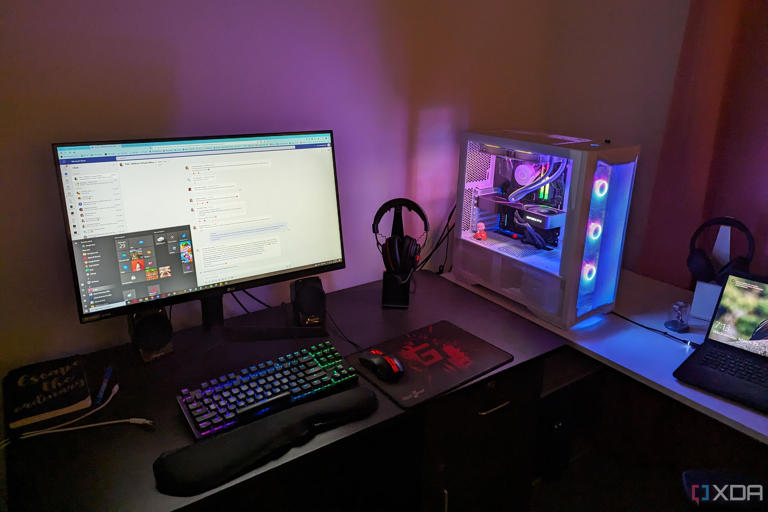
We might love PC gaming to death but it isn't nearly as fun as it was when we were kids
The budget GPU compromises
You lose a lot more than you save

There used to be a time when the budget GPU category was considered worthwhile by the GPU manufacturers. Just like the high-end and mid-range segments, the budget segment also saw some quite decent, and often, above-average products. But, if you need to track down the last good budget GPU launch, you need to go back at least 5 years to the GTX 1660 Super, which proved to be a solid 1080p and more than decent 1440p card at only around $200.
 : How to Fix Any Computer (Binge Bytes)


But, in the last five years, the story with budget graphics cards has slowly but surely descended to a flurry of compromises. You have to make do with poor performance in everything but the lightest titles and competitive esports games, let go of any fancy features like ray tracing and frame generation, and start thinking about an upgrade after your card isn't even a year old.
There are some compelling reasons to buy high-end cards over budget options that are centered around superior gaming experience, longevity, and sufficient VRAM, but that still doesn't justify the state of budget GPUs for the last five years. Today, you need to spend at least $400 to experience the latest games in some capacity, especially since ray tracing has become more common than ever.
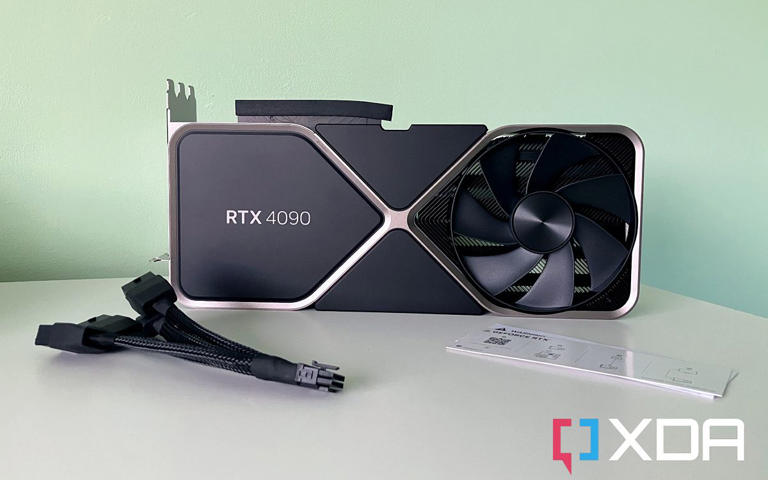
Between Nvidia's overpriced RTX 40 series and AMD's paltry RX 7000 series, desktop gaming is heading towards a crisis.
The lack of affordable white-themed components
A pretty premium for pretty parts

Just a few years ago, white-themed PC components were so scarce that the choice was simple — build a regular-looking PC with the usual black components. However, as the demand for white-themed PC hardware grew, manufacturers gradually introduced a decent variety of white PC components, from white graphics cards and motherboards to CPU coolers, memory, and PC cases.
Today, you have at least three different AIB options for nearly every white-themed PC component. But, the affordability hasn't kept pace with the variety of these components. You still need to pay anywhere from $50-$100 more for a white graphics card compared to other models. The same is the case with motherboards, where the only decent white models would cost at least $50 more than regular models.
For CPU coolers and RAM, the problem isn't as big, but the overall price of an all-white build still far exceeds that of a regular one. Paying a significant premium just for a different color of the same component is a tad harsh. While it's true that manufacturers need to account for the higher cost of producing and maintaining white components, the fact is that PC builders have been struggling with the result for a long time.

These parts might not increase your PC performance, but they still bring some much-needed oomph to your build.
Intel's platform longevity woes
We all resigned to it long ago
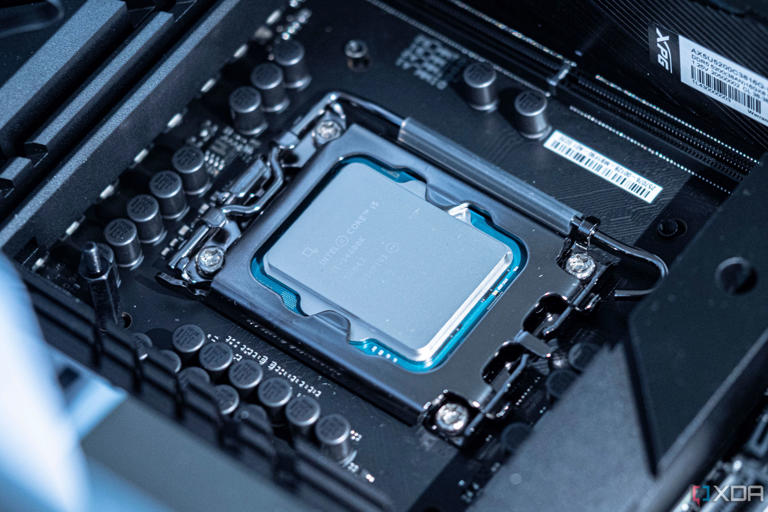
Before AMD debuted its AM4 socket in 2017, PC users were fine with their motherboards lasting for just one or two CPU generations. But, with AM4, AMD offered a new reality where you could make your motherboard last for up to 4 CPU generations or 5 years (maybe more with AM5). This was truly revolutionary in the PC hardware space, and with Intel still introducing new sockets every year or two (LGA 1700 being the exception), AMD managed to sway a lot of users its way.
The adage quickly became "If you want seamless CPU upgrades lasting years, go with AMD." PC users have accepted the fact that Intel would never emulate AMD in offering long-lasting sockets. Even with Intel's next socket, the upcoming LGA 1851 set to debut alongside the Arrow Lake desktop CPUs, the company is planning to support it only until 2026, so a total of 2 CPU generations (2024 and 2025) before the next lineup arrives in 2026.
With the Ryzen 5000 and Ryzen 7000 series CPUs, AMD finally caught up to, and even exceeded, Intel in gaming as well as productivity performance. Combined with superior power efficiency and platform longevity, AMD became the number-one choice for a lot of PC users. This might continue with the Ryzen 9000 vs. Arrow Lake face-off, unless Intel really delivers some stupendous gains with its next-gen processors.

With the desktop CPU space fiercer than ever, should you pick AMD or Intel?
Nvidia's overpriced GPUs and stingy VRAM
Cornering the market and reaping the rewards

For as long as I remember, Nvidia has stood firm at the top of the mountain when it comes to graphics cards. Whether you look at market share, mind share, performance, or innovation, every metric tells the same story. However, this dominance has tempted the company to take some questionable steps in the wrong direction over the years, leading to some unfortunate realities that gamers have had to contend with.
For instance, starting with the RTX 20 series, Nvidia introduced hefty price bumps on its flagship GPUs alongside its shiny new ray tracing features. Compared to a $699 GTX 1080 Ti, we saw a $999 RTX 2080 Ti, and later a $1,999 RTX 3090 Ti and a $1,599 RTX 4090. Never before had GPUs been luxury products, but Nvidia knew people would buy them at any price, and that's exactly what happened (at least till the RTX 30 series, and for most of the RTX 40 lineup).
Making matters worse, Nvidia started skimping on VRAM starting with the RTX 30 series, with the RTX 3070 becoming one of the GPUs that didn't age well at all. The $999 RTX 4080 Super only has 16GB VRAM against 20GB seen on the RX 7900 XT. This trend is seen at nearly every price bracket where AMD has consistently offered more VRAM at the same or even lower price. Users should not be left wanting for VRAM when buying high-end graphics cards.
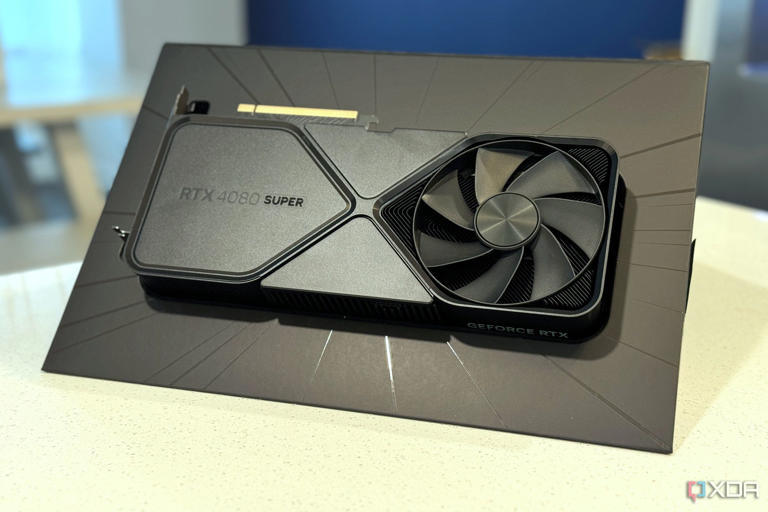
High-end graphics cards don't justify the premium. I can save hundreds of dollars and still get a superb gaming experience with a mid-range card.
AMD's inferior ray tracing
Still waiting for AMD to catch up

Since ray tracing arrived to gaming graphics cards with the launch of Nvidia's RTX 20 series, Team Green wasted no time in bringing the new technology to more and more titles. Pretty soon, it became a major factor for users when choosing the best GPU for their gaming PCs. AMD was already a step behind, as ray tracing arrived only with the debut of its RDNA 2 graphics cards in the form of the RX 6000 series.
Being late to the game, AMD's ray tracing showing left a lot to be desired. AMD alternatives had relatively poor ray tracing performance despite offering decent competition to Nvidia in rasterized performance. Even in upscaling tech, AMD's FSR lagged behind Nvidia's DLSS. Despite some improvements in ray tracing hardware with its RX 7000 cards, AMD still can't compete with Nvidia in ray tracing performance.
2024 is a crucial year for AMD as it needs to step up its ray tracing performance significantly with the RX 8000 graphics cards. Even if the rumors are true regarding AMD staying out of the high-end market, it needs to offer some big incentives for users to consider it in the mid-range and budget segments as well.
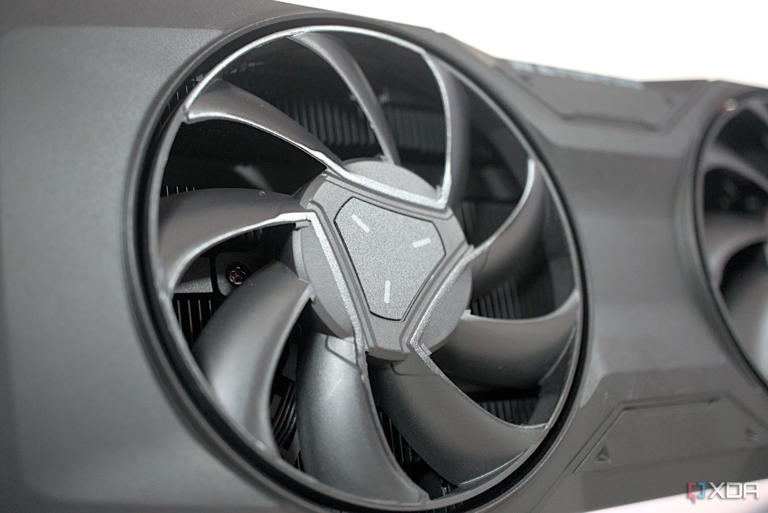
Coming out of the GPU crisis, 2023 was supposed to bring a breath of fresh air. It did bring something fresh, but not what we expected
What does the future hold for PC hardware?
As far as overpriced GPUs and short-lived CPU sockets are concerned, I don't have any hope for Nvidia's RTX 5000 cards or Intel's Arrow Lake CPUs. The budget GPU segment might see some interesting action as Intel launches its Battlemage GPUs and turns the desktop GPU space into a 3-way battle royale. There are some rumors pointing toward AMD using "brand-new" ray tracing hardware, so we can hope for some major improvements, if not a reversal of fortunes.


